
— Friedrich W. Nietzsche
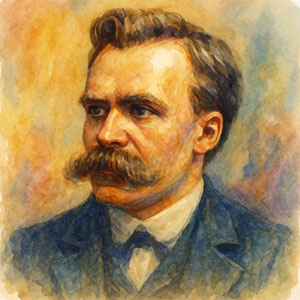
Born on this day in 1844 in Röcken, now part of Germany, philosopher Friedrich Wilhelm Nietzsche wrote with fire, solitude, and aching honesty. His ideas were too bold for his time, yet they planted seeds that continue to blossom in every thinker who dares to question, to wonder, and to live with authenticity. Brilliant and restless, Nietzsche looked inward and found both storm and sunlight — teaching that the struggle itself can be a form of grace.
“I am no man. I am dynamite,” he declared, not in arrogance but in recognition of the power within the human soul. The son of a Lutheran minister, he studied theology and music before devoting himself to philosophy. “Faith is not wanting to know what is true,” he wrote, challenging others to stand courageously before the mystery of life.
To Nietzsche, living was art — a constant act of creation. He celebrated those he called “secure, highly individualistic artists on earth,” the ideal Übermensch or overman — spirits such as Socrates, Jesus, Leonardo da Vinci, Shakespeare, Goethe, and Napoleon. Each, he believed, reshaped the world through courage and creative will.
“There are no facts,” he wrote, “only interpretations.” In tragedy, he saw nobility and power — a purification of the human spirit. His ideas were later misused by those seeking domination, but Nietzsche’s truth was always rooted in freedom — the freedom to become oneself, to rise from pain, and to dance again after the storm.
His words inspired existentialism and influenced Freud, Jung, and countless seekers of meaning. “Freedom is the will to be responsible to ourselves,” he wrote. “The essence of all beautiful art, all great art, is gratitude.”
Though madness claimed his final years, Nietzsche’s voice endures — luminous, questioning, alive. In solitude he found strength; in thought, tenderness. And in the quiet after his words, we can still hear the echo of his heart whispering: become who you are.
 Solitude strengthens the heart.