
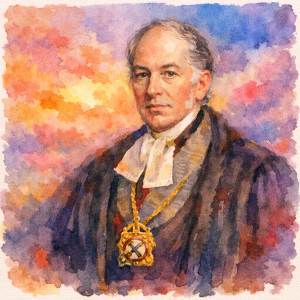
 A man dedicated to the passion of truth, philosopher and Anglican archbishop Richard Whately (1787–1863) was born on this day in London, England, the youngest of nine children.
“Preach not because you have to say something,” he once advised, “but because you have something to say.”
The son of a clergyman, Whately was educated at Oxford, where he wrote the essay Historic Doubts Relative to Napoleon Bonaparte (1819), a satirical examination of skepticism that revealed his sharp wit and logical rigor.
“A man is called selfish,” he observed, “not for pursuing his own good, but for neglecting his neighbor’s.”
Best known for The Elements of Rhetoric, Whately’s philosophical arguments celebrated clarity, truth, and strength. Many credit him with helping revive the serious study of logic in England.
“He only is exempt from failures who makes no efforts,” he said, a reminder that clear thinking still requires courage.
Whately became a social reformer and champion for the unpopular causes of his time, including civil equality for Catholics and Jews. Named archbishop of Dublin in 1831, he worked steadily for what he believed was the Christian moral ethic of justice and human dignity.
“Lose an hour in the morning, and you will spend all day looking for it,” he warned.
Whately understood that imagination and discipline belong together. Our castles in the air reveal what we love most, and our choices show whether we are willing to build with care.
 Dream on. And build wisely.